
What It Costs to Keep Africa Wild
Inside the conservation, communities and complex economics of safari travel
The Price Behind the Silence
At dawn, a well-run safari camp can make the impossible look effortless. Coffee appears before the first game drive. A guide reads tracks in low light. A vehicle is ready despite having spent years on punishing roads. Dinner that evening may arrive with good wine, fresh produce and linen, even though the nearest commercial center is hours away and the camp itself may be reachable only by light aircraft.
That ease is part of the craft. It is also why the price can be startling.
When I walk clients through a safari proposal, the most useful question is rarely, "Why is this room so expensive?" A safari camp is not selling a room in the conventional sense. It is operating a small, temporary settlement inside a wildlife economy. The rate must carry the cost of access, staff, training, food, fuel, power, water, waste, vehicles, aircraft logistics, park or concession rights, emergency systems, conservation work and the long months when occupancy is low but the land still has to be protected.
The rate can also carry something more consequential: an economic argument for keeping a wild place intact. That argument deserves scrutiny. Expensive does not automatically mean responsible, and a conservation claim is not proof of conservation. But when a safari is built well, the guest is buying access to wildlife while helping finance the conditions that allow wildlife, local livelihoods and protected land to coexist.
This is the part of safari pricing that a nightly rate alone cannot explain.
A Camp Is a System
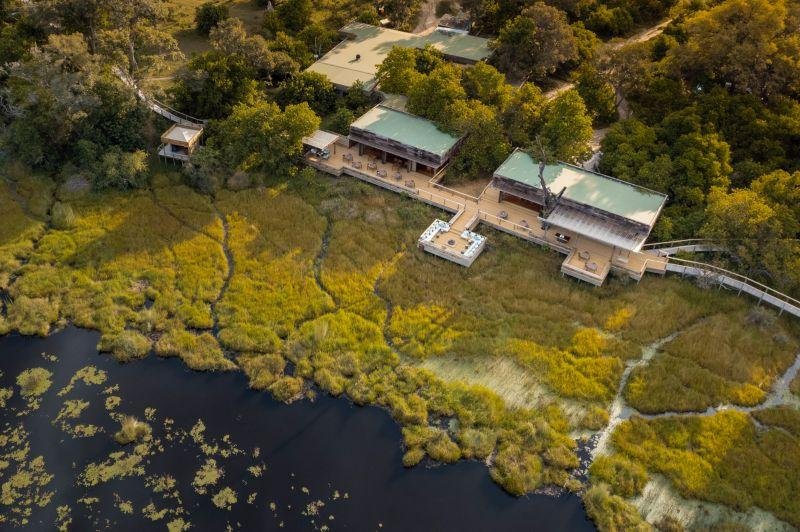
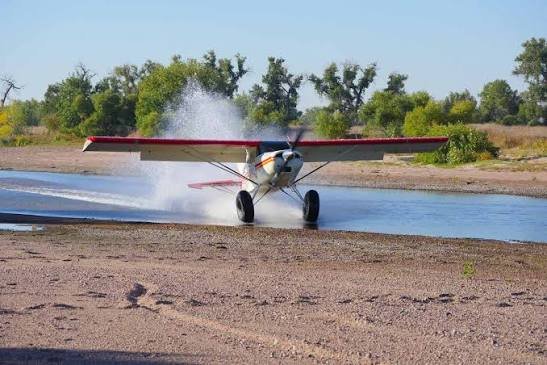
Consider what it takes to support a small camp far from a paved road. Food must be planned, purchased and moved through a fragile cold chain. Diesel may still be needed for backup power, pumps or vehicles even where solar supplies most electricity. Water has to be sourced, treated and monitored. Waste must be separated and, where possible, removed. Vehicles need mechanics and spare parts. Radios, satellite communications and medical procedures have to work when the nearest hospital is not nearby.
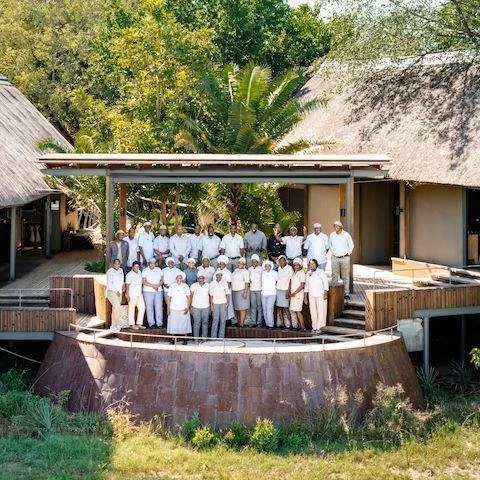
Then there is the human infrastructure. An intimate camp may have only six to twelve guest rooms, yet it needs guides, trackers, chefs, servers, housekeepers, hosts, maintenance staff, mechanics, managers, security teams, reservation staff, pilots and logistics crews. Some staff live in camp for weeks at a time, which means the operator also provides staff accommodation, meals, transport, uniforms, training and often medical or educational support.
Botswana's 2026 budget offers a useful sense of scale. The government reported that the renewal of leases covering 27 lodges in Ngamiland safeguarded more than 1,500 existing jobs. That works out to roughly 56 jobs per lodge before counting suppliers and the spending generated by employees in their home communities. The same budget linked five newly allocated tourism sites and concession areas to more than 500 expected jobs and to rental income for community trusts.[1]
This is why the comparison with a city hotel breaks down. A hotel can rely on a municipal grid, a sewer system, commercial deliveries, public roads and a large local labor pool. A remote safari operator must reproduce many of those systems privately, at small scale, while meeting conservation rules and operating in an environment that is intentionally difficult to develop.
Scarcity Is Often a Policy Choice
Botswana makes the spatial economics unusually clear. Its high-value, low-volume tourism model limits the number of beds in many of its most sensitive landscapes. On the 60,000-hectare Vumbura concession in the Okavango Delta, Wilderness operates two principal properties: Vumbura Plains, with fourteen tents divided between north and south camps, and seven-tent Little Vumbura. The concession is leased through a partnership with the Okavango Community Trust, representing five villages.[2]
Now compare that with South Africa's Sabi Sand Nature Reserve. The reserve covers about 65,000 hectares, almost the same area, and its official 2026 directory lists roughly two dozen lodge properties across its northern, central, western and southern sectors.[3]
The comparison is not a verdict on quality. Sabi Sand supports formidable conservation programs, local employment and exceptional guiding. Its road access and denser lodge network can also make it more efficient and more accessible at different price points. Botswana is selling a different allocation of space: fewer beds across a comparable area, with long transfers, private concessions and very low vehicle density. When twenty-one tents help carry the economics of 60,000 hectares, each occupied bed must shoulder more of the cost.
That is the arithmetic behind exclusivity. The privacy is real, but it is not merely a luxury flourish. It is created by land-use policy, concession structure and a deliberate ceiling on volume.
Where the Tax and Fee Burden Goes
When clients ask where the money goes, I often give them a useful planning range: on a luxury safari, roughly 20 to 30 percent of the total cost can be consumed by taxes, tourism levies, conservation and park fees, concession charges, permits and other government costs. It will not appear as one neat line labeled "safari tax," and the percentage varies by country and itinerary. But the broader point is consistent: a meaningful share of the price is already committed before the lodge begins paying for the guest experience.
Start with the taxes a traveler can recognize. Botswana applies a 14 percent standard value-added tax rate. Zambia's standard VAT rate is 16 percent, with a 1.5 percent tourism levy on specified tourism services. Zimbabwe's revenue authority lists a 15.5 percent standard VAT rate.[4] Those charges are only the visible beginning, and they can change, which is one reason a safari proposal should always be priced with current information rather than an old rate sheet.
Then the layers begin to stack. Every guest may generate park-entry or conservation fees. A camp may pay concession rent, bed levies, tourism levies, business licenses, work permits, vehicle permits and aviation charges. The operator also faces payroll-related taxes, corporate tax where profit exists, and import duties on the vehicles, solar equipment, refrigeration, specialist parts and building materials needed to operate in the bush. In community-owned concessions, lease payments or revenue shares may flow directly to local trusts. Each charge has a different destination, but together they explain why the amount retained by the lodge is far smaller than the published rate suggests.
This is why I use 20 to 30 percent as a practical estimate, not a promise that every itinerary will land on the same number. What matters is understanding that this money does not simply disappear into a room rate. It moves through public agencies, protected-area authorities, local governments, community trusts and the systems that regulate access to wildlife. In the best models, those obligations help turn tourism into funding for the land and communities that make the journey possible.
This is also why two camps that look similar online can be priced very differently. One may operate on private land with road access. Another may pay a remote concession fee, collect park charges for every guest, fly supplies over a delta and fund year-round patrols across a large wildlife area. The photographs show tents and elephants. The balance sheet shows two entirely different enterprises.
Debt and the Cost of Protecting a Global Asset
A safari price also sits inside a much larger economic story. Many of Africa's great wildlife destinations are in countries carrying heavy debt while trying to fund schools, hospitals, roads, electricity and climate resilience. At the same time, the world expects them to protect vast landscapes and globally important biodiversity. Those responsibilities do not pause because a national budget is under strain.
The World Bank reported that external debt service in Sub-Saharan Africa more than doubled over the decade to 2024 and reached about 2 percent of regional GDP. Its April 2025 Africa's Pulse projected roughly 20 billion dollars in interest payments that year on public and publicly guaranteed external debt.[5] That debt is spread across commercial bondholders, bilateral lenders, including China, and multilateral institutions. Zambia has made substantial progress in restructuring its obligations, yet the International Monetary Fund still assessed the country in 2025 as being at high risk of external and overall debt distress.[6] Zimbabwe continues to face arrears and constrained access to international finance.[15]
Debt pressure does not create every park fee, but it makes dependable revenue more urgent. Many countries also have large informal economies, which means the formal income-tax base is much narrower than the population itself. Governments therefore rely heavily on revenue they can collect consistently, including consumption taxes, border charges and tourism-related fees.[15] For a tourism-dependent nation, an international visitor is both a guest and a source of foreign currency. The taxes, park fees and concession payments attached to that visit help finance conservation at a time when a ranger post, road grader or wildlife census is competing with hospitals, schools and electricity systems.
This is where global stewardship becomes personal. We arrive with currencies that often have tremendous purchasing power, enjoy a protected landscape for a few remarkable days and then fly home. Local communities remain beside the elephants that raid crops, the predators that threaten livestock and the parks that limit how surrounding land can be used. Paying a fair price is not charity. It is our share of the cost of protecting something the whole world values, even though the daily responsibility for it is carried locally.
The Job Beyond the Job
One of the most important things to understand about safari tourism is that a single lodge job rarely supports only one person. Across many rural communities, one salary may help provide food for parents and children, school fees for siblings, medical care for relatives and improvements to a family home. The often-used estimate is that one lodge employee may support six to ten people. The exact number varies, but the reach of that paycheck is real, and it is one of the clearest ways our tourism dollars travel beyond the lodge gate.
The research gives substance to what safari professionals see on the ground. Susan Snyman's study of sixteen high-end ecotourism camps across six Southern African countries included 385 staff interviews and roughly 1,400 community interviews. It found that remote rural households relied heavily on income connected to ecotourism and that formal tourism employment played an important role in household welfare.[7] In Zanzibar, a practitioner quoted by The Long Run estimated that one income earner commonly supports at least six family members.[8] These are not abstract multiplier effects. They are school uniforms, groceries, medicine and choices that become possible because someone has dependable work.
Zambia makes that reach especially visible. A World Bank study around Lower Zambezi and South Luangwa national parks found that tourism generated employment for 14 percent and 30 percent of the adjacent working-age population, respectively. Between 58 and 59 percent of surveyed households reported wage income from tourism employment. The same project documents cite research estimating that three international leisure visitors generate one permanent direct job and that each additional kwacha of visitor spending raised local household income around a park by 1.82 kwacha.[9] A safari booking may begin as a personal dream, but its economic footprint can extend through an entire community.
That is why responsible tourism is about more than a donation photographed for a brochure. It is found in steady salaries, produce contracts, laundry cooperatives, community leases, training and genuine paths into leadership. When local people share in the economic value of wildlife and have a meaningful voice in how tourism uses their land, conservation becomes a source of opportunity rather than a burden imposed from somewhere else.
A small safari camp may require dozens of employees, with each salary often supporting an extended network of family members.
How Tourism Helps Keep Wildlife Alive
For communities living beside wildlife, conservation is not an idea. It is daily life. Farmers may lose crops to elephants. Livestock owners may lose animals to predators. At the same time, illegal wildlife networks can offer quick cash in places where formal jobs are scarce and dependable income is difficult to find. This is a social and economic reality, not a judgment on the people who live closest to the animals.
Well-designed tourism can change that equation. A stable wage, a market for produce, a community lease, a scholarship or a training program allows families to experience a direct benefit from keeping wildlife alive. At the same time, tourism revenue can fund ranger salaries, patrol vehicles, communications and intelligence networks. The World Bank has concluded that well-planned wildlife tourism can strengthen the value of living animals, reduce incentives for poaching and attract investment into protected areas.[10]
We saw the connection most clearly when tourism stopped. During the pandemic, international arrivals and lodge income collapsed across many transfrontier conservation areas in Southern Africa. An IUCN review found that job losses and reduced operating funds weakened patrol capacity and, in some places, coincided with increased poaching and illegal harvesting of natural resources.[11] When tourism returns, the flow can move in the opposite direction: people go back to work, conservation teams regain resources and wildlife once again has visible economic value to the communities sharing the landscape.
The most hopeful outcome goes beyond anti-poaching patrols. It is a generation of guides, researchers, managers, pilots, chefs and community leaders who see conservation as a viable future. Tourism should not be the only livelihood available, but in many safari regions it is one of the most immediate ways to fund both opportunity and protection. This is precisely why the operator matters. The right lodge or outfitter does not simply bring guests close to wildlife; it helps make conservation worth defending long after the game drive ends.
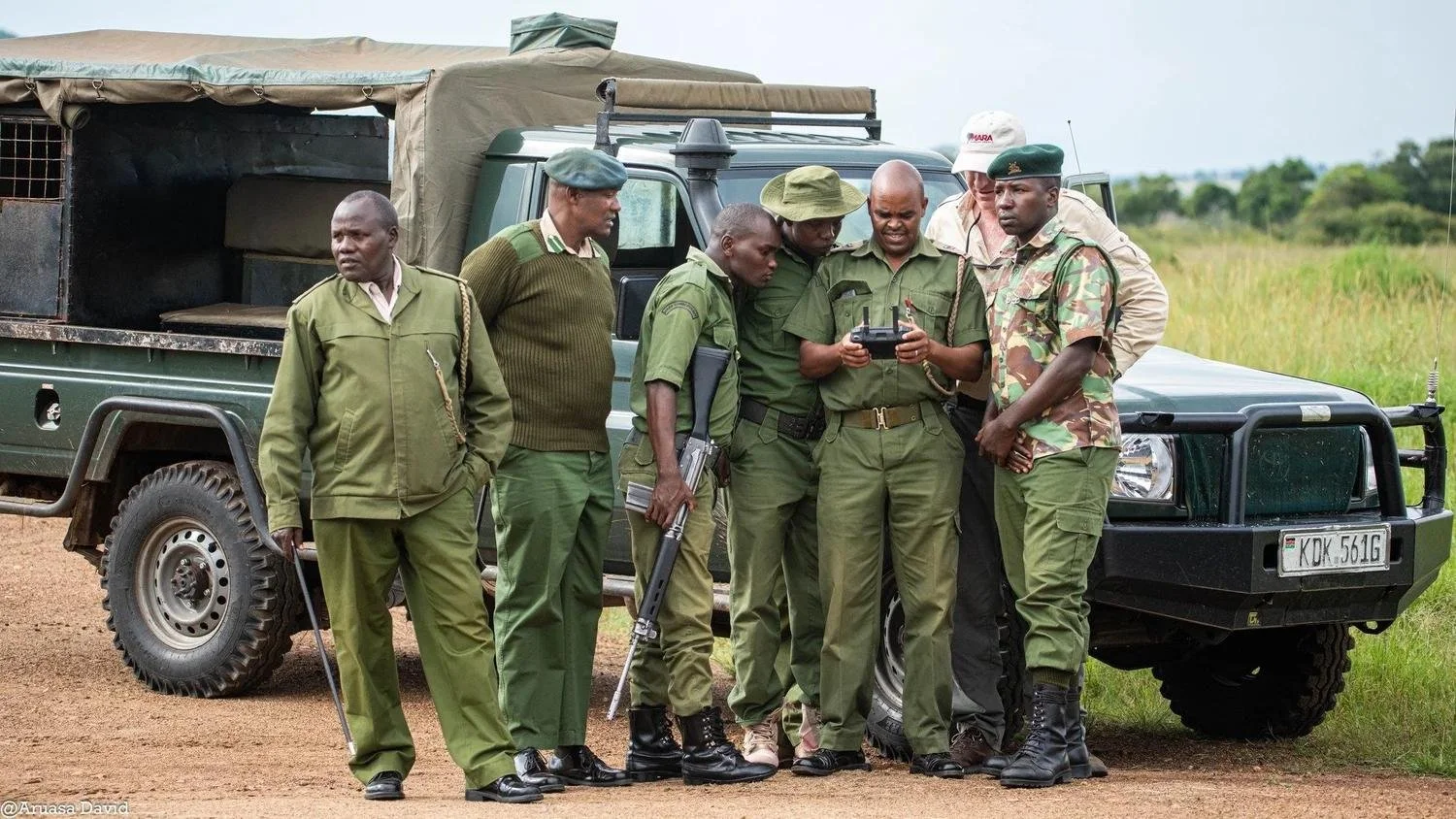
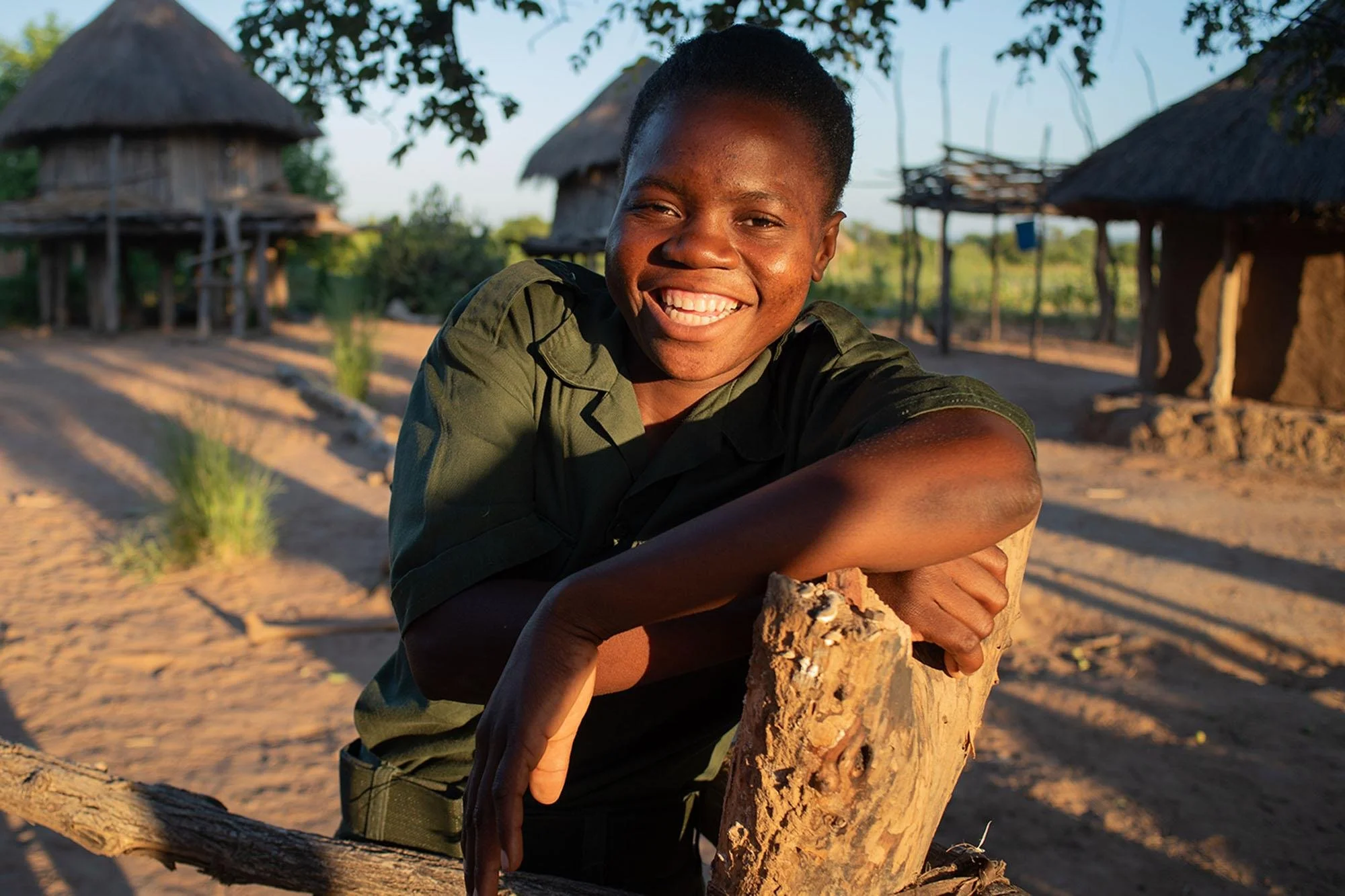
Tourism revenues can help fund ranger salaries, patrol vehicles, communications and the year-round protection of wildlife habitat.
What Responsible Safari Travel Looks Like
The encouraging news is that the best safari companies can show exactly how their work benefits wildlife and neighboring communities. Their conservation programs are part of the operating model, not a decorative paragraph on a website. They invest in local employment and advancement, work with communities on human-wildlife conflict, protect habitat throughout the year and measure what their programs actually accomplish. That substance is what separates genuine stewardship from greenwashing.
That is why I do not select suppliers by luxury level alone. Beautiful design, exceptional guiding and seamless logistics matter; my clients are paying for an extraordinary journey. I also want to know that the experience is connected to responsible land use, meaningful local employment and conservation work that continues when the camp is not full.
Credible operators are proud to provide evidence. They can explain their community partnerships, employment and training programs, local purchasing and year-round conservation work in clear language, often through an impact report or independent standard. A glossy promise that a camp "supports the community" is easy to make. A consistent record of jobs, revenue sharing and measurable conservation is far more meaningful.
Responsible practice is visible in the guest experience too: excellent guide training, sensible vehicle limits and wildlife encounters handled with patience and respect. These choices protect the animals while creating the kind of safari most travelers actually want: intimate, unhurried and connected to place.
What Travelers Should Ask Their Advisor
A traveler should not need to audit a lodge from the back of a game vehicle. That is part of the value of working with a knowledgeable advisor. The conversation can remain simple: who benefits from this safari, what is being protected and can the operator show evidence that its promises are real?
The difference between conservation and greenwashing is usually evidence. A responsible company should be able to point to local employment and advancement, community agreements, conservation funding and thoughtful wildlife practices. Travelers do not need to study every operational detail, but they should expect their advisor, lodge or outfitter to answer those questions with more than a beautiful slogan.
Most importantly, ask your advisor why a particular supplier was chosen. The answer should connect the camp to the experience you want, explain the value behind the price and show how the company contributes to the place it depends upon. Awards are lovely. Evidence is better.
A good advisor will also be candid about tradeoffs. Botswana's low-density concessions can offer extraordinary privacy, but the remote logistics and limited number of beds make them costly. A more accessible South African reserve may deliver superb guiding, easier transfers and a broader range of rates, while sharing the landscape with more lodges and vehicles. A community conservancy may offer one of the most compelling land-use models in Africa, yet have fewer conventional luxuries or require more complicated travel days. None of those choices is automatically better. The value depends on what matters most to the traveler and whether the operation delivers on its promises.
Sometimes the highest-priced option is the right one because privacy, access and conservation acreage are the priority. Sometimes a less remote camp creates the better journey because the guiding is outstanding and the logistics leave more time to enjoy it. My role is to understand those distinctions, know which companies are doing the work behind the claims and match the investment to the experience you actually value.
The Responsibility in the Privilege
A safari is one of travel's great privileges. It places us close to animals on their own ground and asks local people to maintain room for those animals long after we fly home. The cost deserves explanation because transparency builds trust. It also deserves perspective.
We should expect excellence for the price. We should also understand that the best safari rates are paying for things we may never see: a mechanic working after dark, a ranger patrol beyond the concession road, a staff bus returning to a village, a borehole repair, a school fee, a lease payment, a firebreak, a wildlife survey and a government charge that helps keep a protected area functioning.
The question is not whether every expensive safari is good. It is whether the safari has been designed so that the value of the experience travels outward: into skilled work, resilient communities, protected habitat and institutions capable of keeping the wild intact.
That is the standard I believe travelers should demand and advisors should defend. Our tourism dollars are votes, but they are not abstract ones. They enter a real economy. Choosing carefully allows the beauty we encounter to have an economic future as well as an emotional one.
If Africa is calling, I would be honored to help you design a safari that is extraordinary in the moment and accountable for what remains after you leave.
Jaime Thomas | Dreamscape Traveler
Jaime@DreamscapeTraveler.com
www.DreamscapeTraveler.com
Sources and Fact Check Notes
Sources were checked against government publications, multilateral institutions, peer-reviewed research and official operator or reserve records. Tax rates and operating details should be reconfirmed immediately before publication because they can change.
1. Government of Botswana. 2026 Budget Speech. Ministry of Finance, February 2026. Figures cited: five tourism sites and concessions expected to create more than 500 jobs; 27 lodge lease renewals safeguarding more than 1,500 jobs.
2. Wilderness. Official pages for Vumbura Plains and Little Vumbura, and the Vumbura community partnership account. Figures cited: 60,000-hectare concession, fourteen tents at Vumbura Plains, seven tents at Little Vumbura, and lease partnership with the Okavango Community Trust representing five villages.
3. Sabi Sand Nature Reserve. Official Lodges directory, updated June 2026, and reserve information. Basis for the comparison: approximately 65,000 hectares and roughly two dozen listed lodge properties.
4. Botswana Unified Revenue Service; Zambia Revenue Authority; Zambia Business Regulatory Review Agency; Zimbabwe Revenue Authority. Current published VAT and tourism-levy materials reviewed September 2026. Rates cited: Botswana VAT 14 percent; Zambia VAT 16 percent and tourism levy 1.5 percent; Zimbabwe VAT 15.5 percent. Rates and exemptions can change.
5. World Bank. Africa's Pulse, April 2025, and Sub-Saharan Africa regional economic update, October 2025. Figures cited: approximately 20 billion dollars in projected 2025 interest on public and publicly guaranteed external debt and external debt service reaching about 2 percent of regional GDP in 2024.
6. International Monetary Fund. Zambia 2025 Article IV Consultation and Fifth Review Under the Extended Credit Facility, Country Report No. 25/225. Assessment cited: high risk of external and overall debt distress despite restructuring progress.
7. Snyman, Susan. The Impact of Ecotourism Employment on Rural Household Incomes and Social Welfare in Six Southern African Countries. Tourism and Hospitality Research 14, nos. 1-2, 2014, pp. 37-52. Sample cited: 385 staff interviews at sixteen camps and approximately 1,400 community interviews.
8. The Long Run. Act Today for a Better Tomorrow, Chumbe Island appeal. Practitioner estimate cited: one income earner in Zanzibar supports at least six family members. This is treated in the article as a contextual estimate, not a regional constant.
9. World Bank. Zambia Nature-Based Tourism and Blue Economy Project, Project Information Document, 2023; and Assessing the Economic Impact of Tourism in Protected Areas on Local Economies in Zambia. Figures cited: employment and household wage-income shares around Lower Zambezi and South Luangwa, the three-visitors-per-direct-job estimate, and the local income multiplier.
